🍄 The Identity of Lanmaoa Asiatica
In the bustling wild food markets of China’s Yunnan Province, locals use the umbrella term Jian Shou Qing (meaning “turns blue in the hand”) to describe over 20 different species of color-changing boletes. However, recent DNA sequencing studies led by researchers at the University of Utah confirmed that the primary species driving the global fascination is Lanmaoa asiatica.
To the untrained eye, it looks like a typical, muted wild mushroom. But the moment its tissue is sliced or bruised, exposure to oxygen triggers an enzymatic reaction that shifts the pale cream flesh into a brilliant, deep sapphire blue in less than two seconds.
🧠 The Mystery of “Lilliputian” Hallucinations
Beyond its dramatic visual oxidation, L. asiatica is famous for its terrifying yet fascinating side effects. When consumed raw or undercooked, it triggers a rare, highly specific clinical psychiatric syndrome known as Lilliputian hallucinations.
Data from local poison control centers shows that 90% to 96% of affected patients report seeing the exact same visions:
-
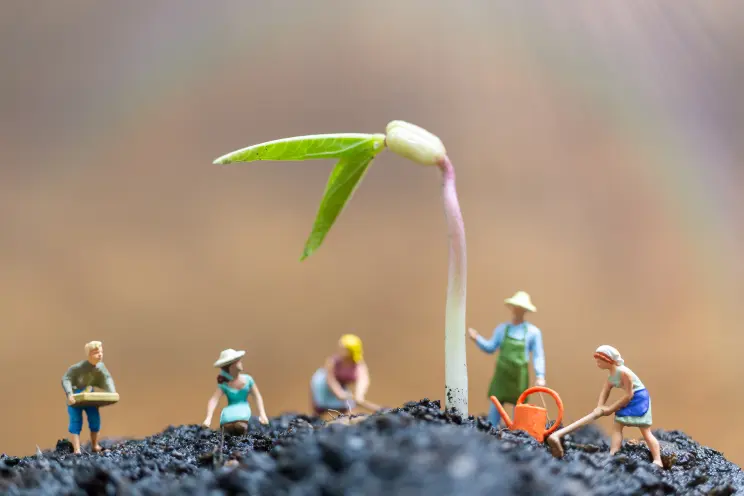
- Autonomous, moving armies of miniature people
- Tiny, fairytale-like elves or clowns
- Small, marching figures interacting directly with the real-world environment
The Chemical Anomaly
What puzzles neuroscientists most is the underlying chemistry. Genomic testing has confirmed that Lanmaoa asiatica contains absolutely no psilocybin, ibotenic acid, or muscimol (the compounds found in typical magic mushrooms).
Because known psychedelics are completely absent, scientists believe the mushroom contains an entirely undiscovered class of fungal toxins that directly target human neurological pathways and alter visual perception.
⚠️ The Risks of Buying Online
If you are considering trying to buy Jian Shou Qing online, you must understand the deep safety concerns associated with it:
-
- Taxonomic Chaos: Because Jian Shou Qing is a market name rather than a scientific classification, a single batch bought from an unverified online seller can contain up to four entirely different species mixed together—some edible, some highly toxic.
- The Lookalike Danger: Wild boletes are incredibly difficult to differentiate. Ordering unregulated wild mushrooms can easily result in severe poisoning leading to nausea, vomiting, confusion, organ failure, or death.
- Extreme Cooking Sensitivity: The mushroom’s toxins are only neutralized by high, prolonged heat. If a piece is sliced too thickly or cooked unevenly, the toxins survive. Yunnan hospitals treat hundreds of cases of accidental poisonings every summer.
The Verdict: You cannot reliably buy or consume Jian Shou Qing safely on your own unless you travel to Yunnan during the peak wild mushroom season (June to September) and have it prepared by a professional chef.
🍳 Safe Alternatives for Your Kitchen
To witness this color-changing spectacle without risking a trip to the emergency room, look for these two legal, non-toxic alternatives:
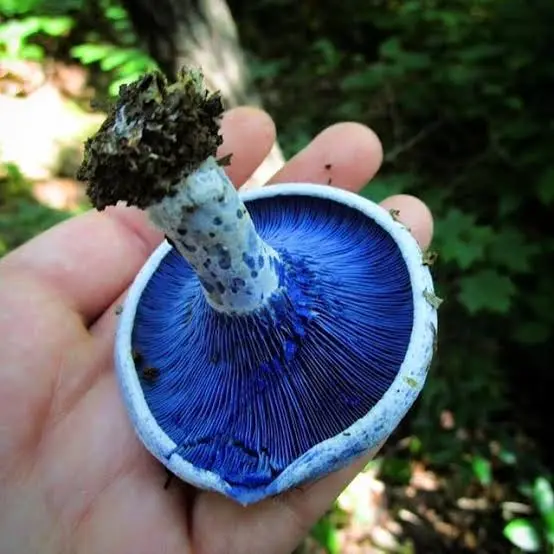
Found across North America and Europe, this highly prized, choice edible mushroom starts out a creamy white. The moment you slice the stem, it turns an intense, shocking electric blue within seconds. It carries zero hallucinogenic or toxic risks.
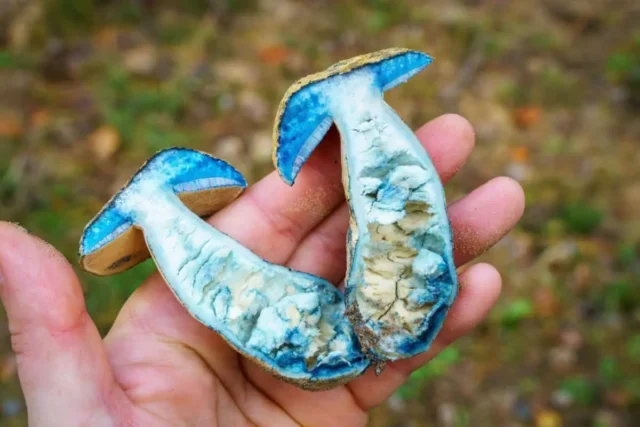
Available seasonally at specialty markets, this stunning mushroom is entirely blue inside and out. Slicing into it releases a vibrant, milky blue sap that mimics the dramatic color transformation of Yunnan’s wild boletes.
🍲 How to Cook Them
The blue pigment in boletes is heat-sensitive. When you sauté Cornflower Boletes in butter, garlic, and thyme, the intense electric blue will rapidly fade into a deep, appetizing gold as it hits the hot pan. Conversely, the Indigo Milk Cap retains its striking silvery-blue hue even after cooking, making it perfect for turning cream sauces, risottos, or pasta an otherworldly blue.
One comment
Jacob Coleman
28/08/2026 at 4:11 pm
Finally, a secure, local pipeline for observing exotic boletes safely