Decoding the Pulvinic Acid Oxidation Pathway: The Biochemistry of Blue-Staining Mushrooms
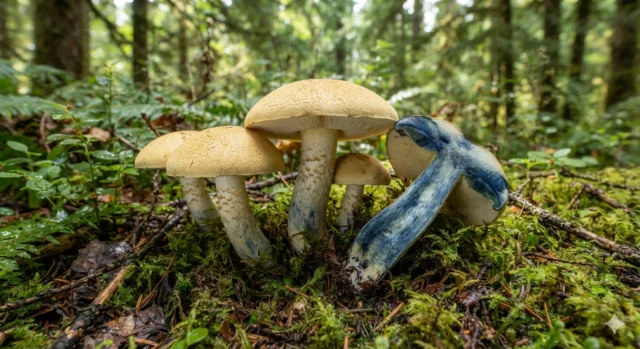
If you have spent any time scrolling through mycology forums, you have likely witnessed a captivating phenomenon: a wild bolete mushroom is sliced open, and its pale, cream-colored flesh transforms into an intense, shocking sapphire blue in less than two seconds.
Locally known in southwestern China as Jian Shou Qing (见手青, “turns blue in the hand”), species like Lanmaoa asiatica have captured global headlines. While viral videos often focus on the dramatic visual shift or the bizarre “Lilliputian hallucinations” that occur when these mushrooms are consumed undercooked, the underlying biochemistry is equally fascinating.
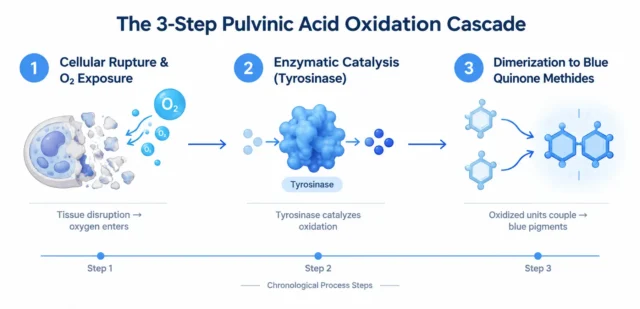
The rapid color shift is not magic. It is a highly sophisticated, oxygen-activated chemical defense system known as the pulvinic acid oxidation pathway youtube…
Check availability for live cultures on our Special Offers page
.
🌡️ The Fading Effect: Why Heat Destroys the Illusion
For most bluing boletes, like the choice edible Cornflower Bolete (Gyroporus cyanescens), the intense sapphire blue color is highly fleeting. The moment a freshly sliced blue mushroom hits a hot sauté pan, the blue color rapidly vanishes, reverting to a rich golden yellow or deep brown.
This occurs due to thermal denaturing and structural instability:
- Enzyme Deactivation: High cooking temperatures instantly denature the heat-sensitive tyrosinase enzymes, stopping any further oxidation in its tracks.
- Molecular Degradation: The blue quinone methide anions are highly unstable and structurally resilient only within a narrow, room-temperature pH environment. Extreme heat breaks the weak intermolecular bonds holding the dimers together, causing the conjugated light-absorbing system to collapse.
An exception to this rule is the Indigo Milk Cap (Lactarius indigo). It utilizes structurally resilient azulene-based pigments rather than pulvinic acid derivatives, allowing it to retain an otherworldly silvery-blue hue even after being cooked.
🧠 The Psychological Link: Toxins vs. Pigments
A common misconception on foraging forums is that a mushroom’s blue-staining reaction indicates the presence of psilocybin. While psilocybin-containing mushrooms do bruise blue when damaged, the chemical pathway is entirely different. Magic mushrooms bruise blue due to the oxidation of psilocin, which is structurally distinct from the pulvinic acids found in boletes.
In fact, the blue pigment itself in Lanmaoa asiatica is completely non-toxic and flavorless. The true danger lies in entirely separate, co-existing compounds.